Showing posts with label China. Show all posts

Sunday, 28 March 2010

How China overtook the US in renewable energy | News | guardian.co.uk


Solar panel at a workshop in in Hangzhou

China renewable energy: An employee displays a solar panel at a workshop in a factory in Hangzhou, Zhejiang province. Photograph: LANG LANG/REUTERS

China has overtaken the US for the first time in a league table of investments in low-carbon energy among the G-20, according to a new report by not for profit group the Pew Charitable Trusts published this week.

How China overtook the US in renewable energy | News | guardian.co.uk

Beijing to sweeten stench of rubbish crisis with giant deodorant guns

High-pressure fragrance sprays will be installed at Asuwei dump, one of several hundred overflowing landfill sites that are the focus of growing public concern image
In pictures: zooming in on Beijing's rubbish

Beijing to sweeten stench of rubbish crisis with giant deodorant guns | Environment | guardian.co.uk

Sunday, 13 December 2009

China struggles to treat youth net addicts

 image

After Li Congcong’s parents stopped him going to an internet cafĂ©, the 17-year-old poured pesticide into some cabbage soup. His mother and father were dead within hours after lunch. Mr Li will be more than 30 when he is released from prison.

His story is just one of 30 chilling tales told in Who Took Our Children?, a documentary that recently started showing in Jiyuan, Mr Li’s hometown in the central Chinese province of Henan.

FT.com / China / Society & People - China struggles to treat youth net addicts

Wednesday, 4 November 2009

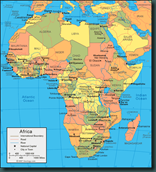
Why Africa welcomes the Chinese

image image

There is a debate among geopolitical and economic commentators about the merits of Chinese versus western involvement with Africa. One argument is that Chinese investment is exploitative and undermines the development of democracy and human rights on the continent. Others view the matter in terms of competition, arguing that China is encroaching on the decades-long monopoly of the west over Africa's natural resources.Neither of these viewpoints addresses the core issues. First, major players in global investment and development are discussing Africa without engaging its people as equal partners. Second, Africans are not seen to be proactive in setting their own priorities and terms of engagement.Development aid, fashioned on this skewed relationship, has long been a key source of income for the continent. While helpful, aid has not delivered sustainable development. It is clear that trade and investment bring greater opportunity for wealth creation. Africa welcomes investment, from the east and west, north and south, and Rwanda is no exception. We want investment that offers skills and jobs, encourages entrepreneurship, and provides the opportunity to improve millions of lives.

This call for investment and trade rather than traditional aid does not mean the latter's contribution to addressing poverty is not recognised. However, the fundamental problem with the current development aid practice is the danger countries face as they become perpetually reliant on handouts.So what should those who give aid, and those who receive it, focus on? The primary purpose of aid should ultimately be to work itself out, leaving a positive legacy behind. Aid should also be used to create opportunities for trade, enhance self-sufficiency and assist with the development of a robust private sector to attract investment. In many countries, for example, aid offers resources such as fertilisers for free. The intention is good but this often prevents local businesses from being able to provide these goods competitively. Given the choice, people would prefer to work and provide for themselves, rather than receive charity. Africans want self-determination and dignity.

Our continent, like others, requires investment to further its development. Efforts to pursue this need not be seen as a threat to the strengthening of democracy. Of course, African leaders should take good governance and human rights seriously – and most do. This is not – and should not be – because anybody else tells us to, or in return for investment, but because it is the right thing to do. The presence of Chinese investment in Africa does not discharge governments of their responsibilities any more than its presence in the EU or US should erode human rights there.

In Rwanda, we have worked hard to tackle the root causes of corruption and ensure there is a strong case for attracting investment. This programme of reform is yielding results and has been recognised by the World Bank's 2010 Doing Business Index, which saw Rwanda jump from 143rd to 67th position in one year, making it the world's leading reformer. In 2008, Rwanda's GDP grew at 11.2%, and despite the global financial crisis our 2009 projections give us cause for optimism. Wages in key export sectors have grown more than 20% annually over the last eight years, and all these developments have occurred while the percentage of our national budget funded by aid has been reduced by half since 2001.Ultimately, Africa's relationship with its international counterparts should be red

Defined. For too long, we have not been able to trade fairly with Europe and the US; trade barriers and subsidies, particularly in agriculture, have protected external markets from African products, hindering our ability to trade as equals. Investment and trade with willing countries, including intra-African trade, helps the continent to build a much-needed culture of entrepreneurship and development.

All would benefit if the world focused on increasing investment in Africa, and if Rwanda and the rest of the continent worked to establish more equitable international partnerships. A trade relationship built on this new approach would be more helpful in reaching what should be our common goal: sustainable development, mutual prosperity and respect.

Why Africa welcomes the Chinese | Paul Kagame | Comment is free | The Guardian

Saturday, 3 October 2009

China

 image

BBC NEWS | World | Asia-Pacific | China: Population

Tuesday, 29 September 2009

G20 economies

Thursday, 20 August 2009

Shanghai urges 'two-child policy'


Chinese child with teddy, flag

China's only children are often spoiled "little emperors"

Officials in Shanghai are urging parents to have a second child, the first time in decades the government has pushed for more babies.

A public information campaign has been launched to highlight exemptions to the country's one-child policy.

Couples who were both only children, which includes most of the city's newly-weds, are allowed a second child.

The move comes as China's most populous city becomes richer and older, with the number of retired residents soaring.

"Shanghai's over-60 population already exceeds three million, or 21.6% of registered residents," said Zhang Meixin, a spokesman for the city's Municipal Population and Family Planning Commission.

BBC NEWS | World | Asia-Pacific | Shanghai urges 'two-child policy'

Monday, 8 December 2008

Urban change for rural China

The rural White Horse Village

Deep in Wuxi County in the west of China, a sleepy village is undergoing radical change - a symbol of China's economic revolution.

BBC NEWS Programmes Newsnight Urban change for rural China

Sunday, 7 December 2008

BBC - China Stories

VIDEO Resources

Xiao Di is a ten year old boy who lives in Beijing and is a product of China's one child policy.

"The disadvantage about the One Child Policy is that single children find it difficult to make friends... sometimes he feels lonely." - Xiao Di's mum.

BBC - China Stories - Xiao Di - the single child

Wednesday, 30 July 2008

BBC NEWS | Magazine | The filthy air conundrum

Smog at Beijing's Olympic Stadium

Beijing is taking drastic measures to improve its air quality in the run-up to the Olympics. But is it possible to conquer air pollution in a short space of time?

In China's capital city, emergency measures are afoot.

It is nine days until the games begin. Beijing has a reputation for bad air pollution and if the national stadium is shrouded in smog on the first day of the games, the embarrassment will be palpable.

Driving through the city is restricted to cars with even or odd number plates on alternating days. Factory emissions have been reduced and some building sites shut down.

BBC NEWS Magazine The filthy air conundrum

Monday, 14 July 2008

China's £4bn drive to buy Africa's mineral wealth - Telegraph

Frederick Kitumbeka, 23, a Congolese road worker, is watched by a Chinese foreman

Full scale work by the Chinese begins to rebuild 2,050 miles of roads in the Democratic Republic of Congo, left to rot in the rainforest after the Belgian colonialists pulled out 48 years ago and further shattered by seven years of war.

The vast project, which will triple Congo's current paved road network, is part of China's largest investment in Africa, a £4.5 billion infrastructure-for-minerals deal signed in January.

China's £4bn drive to buy Africa's mineral wealth - Telegraph

Tuesday, 15 April 2008

Friday, 29 February 2008

China considers ending one-child policy

China could scrap its one-child policy, a senior family planning official said today, acknowledging concerns about its effects in creating an ageing society and gender gap.

China considers ending one-child policy | World news | guardian.co.uk

Tuesday, 19 February 2008

How its economic miracle has not helped the peasants living in Stone Age poverty

China has swept to economic might on the back of a political system which resembles no other on earth.

Link to China: How its economic miracle has not helped the peasants living in Stone Age poverty | the Daily Mail

Sunday, 17 February 2008

Beijing petrol stations to close

China is closing 10% of Beijing's petrol stations to improve air quality ahead of the Olympics in August.By the end of May, 144 will shut because they are not expected to meet higher environmental standards, according to state media.

Link to BBC NEWS | World | Asia-Pacific | Beijing petrol stations to close

Sunday, 18 November 2007

CHINA NOW - Secondary Education

Opportunities For Secondary Schools
CHINA NOW has opportunities and grants for UK secondary schools that wish to develop new or existing relationships with China.

Link to CHINA NOW - Secondary Education

Tuesday, 6 November 2007

Can Shanghai turn green and grow?


Shanghai has been transformed into a global city - but its rapid growth has produced pollution, traffic jams and overcrowding.In becoming one of the centres of the world economy, Shanghai has grown faster than almost any other global city in the past 15 years.

Link to BBC NEWS | Business | Can Shanghai turn green and grow?

Shanghai: Creating a global city


Shanghai is the ultimate poster-child for the effects of globalisation on cities and regions.China's largest city languished for 30 years as the Chinese economy was closed to outside influence, and the country went through the political turmoil of the cultural revolution.

Link to BBC NEWS | Business | Shanghai: Creating a global city

Sunday, 17 June 2007

Three Gorges Dam, China

The longest river in Asia, the Yangtze River brings mixed blessings to China. Although it meets the water needs of millions of people, the river regularly overflows its banks. In the twentieth century alone, Chinese authorities estimated, the river claimed the lives of 300,000 people. To protect some 15 million residents and 3.7 million acres (roughly 14,970 square kilometers) in the lower Yangtze floodplains, China began construction on the Three Gorges Dam in 1994. Like the river itself, the dam appears to be a mixed blessing: the reservoir was expected to submerge about 632 square kilometers (244 square miles) of land and force the relocation of more than a million people. The reservoir was anticipated to submerge ecologically and culturally important sites in the three gorges—Qutang, Wu Xia, and Xiling—that were the dam’s namesake.

These images show the Yangtze River in the vicinity of the Three Gorges Dam (lower right). Landsat 7 acquired the top image on November 7, 2006, after the main wall was complete. Landsat 5 acquired the bottom image on April 17, 1987, several years before construction on the dam began. In the top image, the dam’s main wall appears as a thin, buff-colored line crossing the water. The water body balloons out markedly in the later image—evidence of the rising water level. The water has backed up and expanded tributaries well upstream of the dam (upper left of image).

Link to EO Newsroom: New Images - Three Gorges Dam, China