Sunday, 6 September 2009

Wednesday, 2 September 2009
Aral Sea Continues to Shrink, August 2009 : Image of the Day

Throughout the first half of the twentieth century, the Aral Sea was the world’s fourth-largest lake. In the 1960s, the Soviet Union began a massive irrigation project in what are now Kazakhstan, Uzbekistan, and Turkmenistan, diverting water from the rivers that feed the Aral Sea to irrigate farmland. As its water levels dropped, the lake began splitting into smaller pieces: the Northern (Small) Aral Sea and the Southern (Large) Aral Sea. The Southern Aral Sea further split into eastern and western lobes. The Earth Observatory’s World of Change: Evaporation of the Aral Sea feature tracks this process over the past decade.
Aral Sea Continues to Shrink, August 2009 : Image of the Day


A vision of Britain in 2020: power cuts and the 3-day week
Britain's homes could be without light and heat for long periods by 2020 with the government being forced to repeat the 1974 imposition of power cuts by rota, a doom-laden report by the Institution of Civil Engineers (ICE) says today.
By then, 80% of the gas to fuel Britain's power stations and domestic central heating will be piped "from politically unstable countries thousands of miles away." Mechanical failure, sabotage and terrorist attack would lead to power cuts within days, the report says. The society, established in 1818, says Britain will be at the end of a pipeline which passes through several other countries relying on imported gas.
A vision of Britain in 2020: power cuts and the 3-day week | Politics | The Guardian
Friday, 28 August 2009
Population growth at 47-year high
The UK population grew by 408,000 in 2008 - the biggest increase for almost 50 years, according to the Office for National Statistics.
The total number of people passed 61m for the first time, with changes in birth and death rates now a bigger cause of growth than immigration.
The numbers of people arriving minus those leaving actually fell by 44%.

Wednesday, 26 August 2009
Monday, 24 August 2009
What is the 2030 Perfect Storm idea?

As the world's population grows, competition for food, water and energy will increase. Food prices will rise, more people will go hungry, and migrants will flee the worst-affected regions.
PERFECT STORM 2030 On Monday BBC correspondents report on the problems identified by UK chief scientist John Beddington, in his forecast of a "perfect storm" of food, water and energy shortages in 2030. On Tuesday they address the implications, and possible solutions.
BBC NEWS | Science & Environment | What is the 2030 Perfect Storm idea?
Thursday, 20 August 2009
BELLA GAIA

BELLA GAIA(TM) (Beautiful Earth) is a 'Living Atlas' journey of our world, expressing the deeply moving beauty of planet Earth as seen through the eyes of astronauts. Created by award winning director and classically trained violinist Kenji Williams, BELLA GAIA(TM) features live performances by Williams and world music artists against a large-screen backdrop of orbiting visualizations of Earth from space.
Shanghai urges 'two-child policy'
China's only children are often spoiled "little emperors"
Officials in Shanghai are urging parents to have a second child, the first time in decades the government has pushed for more babies.
A public information campaign has been launched to highlight exemptions to the country's one-child policy.
Couples who were both only children, which includes most of the city's newly-weds, are allowed a second child.
The move comes as China's most populous city becomes richer and older, with the number of retired residents soaring.
"Shanghai's over-60 population already exceeds three million, or 21.6% of registered residents," said Zhang Meixin, a spokesman for the city's Municipal Population and Family Planning Commission.

BBC NEWS | World | Asia-Pacific | Shanghai urges 'two-child policy'
If you want to go green, buy Spanish strawberries - Green Living, Environment - The Independent
The belief that local is best when it comes to measuring the environmental impact of our food is often wrong, says new research

Millions of Britons who think they are doing their bit for the environment by choosing home-grown food over produce imported from thousands of miles away could actually be having the reverse effect, according to a startling new report.
The "food miles" philosophy that decrees anything transported over distance is worse for the environment than something closer to home is frequently flawed, according to researchers funded by the Department for Environment, Food and Rural Affairs (Defra).
If you want to go green, buy Spanish strawberries - Green Living, Environment - The Independent

Krakatoa's fiery eruption

Amateur photographer Marco Fulle's pictures of Krakatoa, between the islands of Java and Sumatra, taken last month, highlight the raw intensity of volcanic eruption
In pictures: The world's melting glaciers | Environment | guardian.co.uk

Glaciers around the world are retreating at unprecedented rates as temperatures rise due to climate change. Some ice caps, glaciers, sea ice and even an ice shelf have disappeared altogether in this century and many more are retreating so rapidly that they may vanish within a matter of decades
In pictures: The world's melting glaciers | Environment | guardian.co.uk
BBC NEWS | World | Asia-Pacific | Typhoon batters south-east China

Typhoon Morakot has struck China's south-east coast, destroying hundreds of houses and flooding farmland.
Almost one million people were evacuated ahead of the storm, which crashed ashore in Fujian province with winds of up to 119km/h (74mph).
BBC NEWS | World | Asia-Pacific | Typhoon batters south-east China
Wednesday, 19 August 2009

Barcelona gets new water supply

A desalination plant has opened near Barcelona - said to be the biggest of its type in Europe - to ease chronic water shortages.
A drought last year forced Barcelona to import drinking water by tanker. It was one of Spain's driest years on record.
The new plant at El Prat del Llobregat will provide 24% of the water consumed in the Barcelona area, officials say. It went into operation on Monday.
Two more desalination plants are being built in the Catalonia region.
The new plant near Barcelona will provide 200m litres (44m gallons) of drinking water daily for the city's 4.5 million people.

If the UK were a village of 100 people... - Features, Health & Families - The Independent

There are, according to the estimate for this month, 6,790,062,216 people in the world. It's hard enough to say the number, never mind picture those people. You could round it up to a less tongue-twisting 6.8 billion, but does that make such a frightening figure any easier to compute? When you try, do you see faces, or just more brain-frying strings of digits?
The sheer vastness of the data we gather in our attempts to understand the world around us has been challenging statisticians since the earliest censuses. The "size of Wales" approach to number-crunching is popular among headline writers; but is it helpful, for example, to imagine the global population in terms of 75,445 Wembleys, or, indeed, 2,341 Waleses? The numbers are still too big.
It's the same with the news we read and hear each day. What does it mean when we're told that unemployment has risen by 281,000? Is that a huge number? Or just a big one? The stories are about people, but it is often hard to see beyond the figures.

If the UK were a village of 100 people... - Features, Health & Families - The Independent
Top Ten Technologies for an Alternative Energy Future « EE/RE Investing
The muscle car of energy efficiency. Combined heat and power isn’t sexy… it’s just using the “waste” heat from your powerplant for some useful purpose. Like cooking your lunch on you car radiator, but using every bit of waste heat you can… Combined heat and power can use 90% of the power in your fuel source for useful work. And now you can have it in your home.
They’re tall, they’re low-tech, and they’re baseload power. They don’t pollute, and the fuel is free. What’s not to like?
8. Molten salt thermal storage
It’s cheaper to store heat than electricity, and molten salts can store a ton of BTu’s very cheaply. And concentrating solar power can produce a ton of heat… without pollution or fuel.
7. Light Emitting Diodes (LEDs)
More lumens per watt… now that’s energy efficiency.
Our energy efficient cars can make the electric grid work better.
5 & 4. Cellulosic Ethanol and Biodiesel from Algae
The two technologies that have real hope of replacing gasoline and diesel as liquid fuel for our cars… We’ll still need massive efficiency gains and Plug-in-Hybrids to reduce our total fuel use, but even with those, corn ethanol and biodiesel from traditional oil crops just can’t produce enough volume.
3. Time of Use pricing and Demand Side Management.
Sometimes the best ideas are the simplest. To make the best use of wind power, we can store power until it is needed, or we can give people incentives to use it when it is available.
Time of use pricing is also a great boon for solar, because solar energy tends to be available near times of peak demand.
Finally, time of use pricing shaves peak demand, which means that we can delay building new fossil fired generation, while renewables get cheaper by the year.
2. Terra Preta
Discovered by aboriginals in Brazil, thousands of years before Columbus, mixing carbon into unproductive soils can make them much more productive… and the carbon stays there for thousands of years. Using charcoal dust as a fertilizer not only holds the hope of a replacement for fertilizer based on fossil fuels, but it is also an easy way to sequester carbon.
1. Compact Fluorescent Lightbulbs
Where else can you get a 1000% payback with little or no risk?

Top Ten Technologies for an Alternative Energy Future « EE/RE Investing
Sunday, 9 August 2009
Met Office : Invent - Weather

This offers the chance to zoom in to your chosen area of the country and add a range of weather information. You can add places of interest, or click the map to get a forecast for the week ahead.
Thursday, 6 August 2009
Coastal path will open up 1,000 miles of previously inaccessible land - Telegraph
Land that will be opened up includes the cliff tops south of Berwick-upon-Tweed in the Borders, the crumbling Norfolk coast south of Sheringham, inaccessible land along the Solent and urban areas around Liverpool. The path will also make it possible for ramblers to walk through golf courses, country estates and farms that are currently closed to the public.

Coastal path will open up 1,000 miles of previously inaccessible land - Telegraph
Monday, 20 July 2009
ANU Climate Change Institute » Report: Climate Change 2009 - Faster Change and More Serious Risks
Today the Australian Government Department of Climate Change released a new report prepared by Professor Will Steffen. The report draws on the science of climate change since the Intergovernmental Panel on Climate Change’s Fourth Assessment Report which was released in 2007.
Download the new report here: Climate Change 2009: Faster Change and More Serious Risks
Download Prof Steffen’s 2001-2005 report: Stronger Evidence but New Challenges
For further information follow link to Dept of Climate Change website
Dept of Climate Change FAQ’s: Climate Change Science - Frequently Asked Questions
Follow link to Senator the Hon Penny Wong’s Press Release 9 July 2009
See ABC news reports and audio on G8 response to climate change
ABC reporter Sabra Lane’s report and interview with Prof Steffen on the World Today on 9 July 09
The Australian National University website homepage report
ANU Climate Change Institute » Report: Climate Change 2009 - Faster Change and More Serious Risks
Huge Earthquake Strikes Single Building in 'Shake Test' - Science News | Science & Technology | Technology News - FOXNews.com
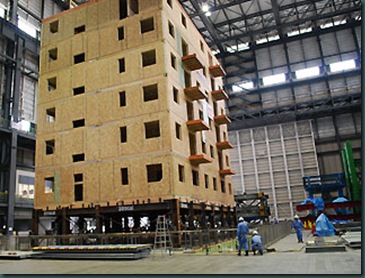
At midnight in Japan on Tuesday, July 14, one of the worst earthquakes in human history took place in Miki City.
But the massive quake — which measured a 7.5 on the Richter scale — only struck one building, a seven-story wooden structure exposed to a simulated earthquake inside a Japanese laboratory. Happily for the U.S. engineers who designed the building, it did not fall down.
The full-scale building sat on a metal shake table that rocked it violently back and forth.
The table, designed to hold up to 2.5 million pounds, reproduced forces based on those recorded at a 1994 earthquake at Northridge, Calif., but scaled up by 180 percent to simulate an earthquake so violent it would only occur on average once every 2,500 years.

"We have more hungry people in the world, than we ever had in the history of human kind." | EarthTrends

"After decades of progress fighting global hunger, the last few years have seen a precipitous increase in the number of hungry people in the world. Kostas Stamoulis, the Secretary General of the Committee on World Food Security, puts it starkly, "we have more hungry people in the world [today], than we ever had in the history of human kind." The recent trend in hunger, shown in Figure 1, projects a historic high in 2009 with 1,020 million people going hungry every day. (FAO, 2009) "No part of the world is immune. All world regions have been affected by the rise of food insecurity," states FAO's Director-General Jacques Diouf. Two years ago the hunger rate also began to rise; meaning the number of hungry people grew faster than world population. These latest figures are not encouraging for the Millennium Development Goal of halving, between 1990 and 2015, the proportion of people who suffer from hunger.
Tuesday, 14 July 2009
Save the Planet – Manchester Report

Manchester Report: Carbon capture plants part-fired with wood
Staffan Gortz explains the potential of carbon capture and storage plants that burn a mix of coal and wood
Manchester Report: Adding lime to the sea Tim Kruger explains how putting lime into the oceans could stop or even reverse the accumulation of CO2 in the atmosphere
Manchester Report: Thorium nuclear power Kirk Sorensen explains how the nuclear energy fuel thorium could replace coal to meet our energy needs
Manchester Report: Energy bonds Tim Helweg-Larsen explains how energy bonds could be used to fund Britain's renewables revolution
Manchester Report: Carbon conversations Rosemary Randall explains how psychology and emotion are key to driving the behavioural change needed to reduce our carbon footprints
Manchester Report: Biochar Laurens Rademakers explains how turning crop wastes and other biomass into charcoal and spreading it on tropical soils can sequester carbon and boost crop productivity
Manchester Report: Giant algae stomachs Mark Capron explains how kelp and algae farmed at sea can be digested in a giant underwater 'stomach' to create fuel and bury carbon
Manchester Report: Hydrogen fuel cell cars Hugo Spowers explains how hydrogen fuel cell-powered cars can lower transport emissions
Manchester Report: Solar power Jeremy Leggett explains how solar photovoltaic technology is poised to become the fastest-growing energy market in the world
Manchester Report: Ceramic fuel cells Mike Mason explains how domestic fuel cells can efficiently and cheaply provide electricity and hot water
Manchester Report: Efficient cooking stoves Peter Scott explains how simple and inexpensive biomass cooking stoves can slash emissions, save forests and avoid lung disease
Manchester Report: Cloud-making ships Stephen Salter explains how ships spraying minuscule droplets of seawater into the air could create clouds that would reflect more solar energy and reverse global warming
Manchester Report: Regenerating grasslands Tony Lovell explains how grazing cattle in a way that imitates the movements of wild herds could lock huge quantities of CO2 into the world's dry soils
Manchester Report: Concentrated solar power Gerry Wolff explains how concentrating solar power in deserts could supply enough electricity to power the whole of Europe
Manchester Report: New indicators of human development Andrew Simms explains why we need to stop measuring the success of our economy and develop new indicators that reflect the ecological efficiency with which we deliver long and happy lives
Latest environment video | Environment | guardian.co.uk
Monday, 13 July 2009
RUSSIAN GAS SUPPLIES
7th January 2009 Who's to blame for the gas crisis in Europe? Rado report:
http://news.bbc.co.uk/today/hi/today/newsid_7815000/7815199.stm 8th January 2009 Bulgaria feeling the impact of gas cut offs, TV report:
http://news.bbc.co.uk/1/hi/world/europe/7818086.stm14th January 2009 Russian gas now floowing to the EU, TV report:
http://news.bbc.co.uk/1/hi/world/europe/7827851.stm
17th January 2009 How gas crisis is hurting Europe, TV report:
http://news.bbc.co.uk/1/hi/world/europe/7834854.stm18th January 2009, a deal between Russian and Ukraine, TV report:
http://news.bbc.co.uk/1/hi/world/europe/7835951.stm
20th January 2009, report on radio about the restoration of supplies:
http://news.bbc.co.uk/today/hi/today/newsid_7839000/7839479.stm
Excellent A2 blog also look at ENERGY Label
BBC NEWS | World | At a glance: G8 summit agenda
The Italian town of L'Aquila is welcoming leaders of the G8 group of industrialised nations for its annual summit, just three months after it was hit by a strong earthquake.

Here are some of the topics they will be discussing:
India prays for rain as water wars break out | World news | The Observer
The monsoon is late, the wells are running dry and in the teeming city of Bhopal, water supply is now a deadly issue. Gethin Chamberlain reports

India prays for rain as water wars break out | World news | The Observer
Saturday, 4 July 2009

OECD Factbook eXplorer for analysing country statistics
A new online tool puts the power of information in the hands of anyone who's interested, and turns data into animation.
Video availabe from the BBC here

Britain 74th in world happiness rankings - Telegraph

Costa Rica is the greenest and happiest country on the planet, according to the rankings developed by think tank the New Economics Foundation, followed by the Dominican Republic and Jamaica.
The UK comes in at 74 out of 143 countries behind post-Soviet Georgia at 72, the military dictatorship Burma at 39 and Sri Lanka, which has been scarred by civil war, at 22.
The highest ranking country in the EU was the Netherlands at 43 followed by France at 71 and Germany at 51.
The United States, was ranked at 114, Canada at 89 and Australia at 102. Zimbabwe and other poor African nations, where life expectancy and happiness is low, came bottom of the table.
Economists said the richer countries came lower in the ranking because of the high carbon footprint of the population, measured by looking at how much of the world's resources people consume per capita.
Levels of life satisfaction, calculated from a worldwide poll, were also not necessarily high in rich countries where violence and inequality continue to be a problem.
In the UK the low ranking was largely due to social problems or what has been labelled "broken Britain" and the high carbon footprint of most of the population.
If everyone in the world wanted to live as people do in the UK, it would require the resources of more than three earths.
Nick Marks, who devised the rankings, said that there are still high levels of inequality in the UK as well as community breakdown and unhealthy lifestyles.
"There are a lot of people who are unhappy particularly at the lower income end of the spectrum but it is not only financial inequality, it is the longer working week, a lack of social cohesion through a sense of belonginess to the community or the geographic area, indebtedness, low levels of volunteering and more passive lifestyles," he said.
He urged politicians to pay more attention to life satisfaction over GDP.
"The big message of these rankings is that we have to produce a system that makes people happier without costing the earth," he said.
Defra, UK - UK Climate Projections

A concerted programme of action in response to climate change is being pursued across the Government, led by DECC and Defra.
Starting with the publication by Defra of the latest UK Climate Projections, Ministers will this summer set out the building blocks of a ‘five point plan’ designed both to reduce emissions at home and abroad and to protect and prepare for the changes that are already inevitable.
Manchester Report: Plans for renewable energy bonds among 20 climate ideas to save the world | Environment | guardian.co.uk

The British public could invest their savings in the UK's renewable energy revolution and reap the financial rewards of helping to save the planet, under ambitious plans to be discussed this weekend.The Public Interest Research Centre, a thinktank based in Wales, says the government could sell "energy bonds" to pay for the required investment. The scheme would be similar to war bonds, which galvanised financial support in Britain during the second world war.
The idea is one of 20 radical solutions to the threat of global warming to be proposed during presentations this weekend in Manchester. The event, organised by the Guardian and the Manchester International festival, will publish a report on the ideas, which will be distributed ahead of key UN talks on a new climate treaty in Copenhagen in December.
6 climate plans1 . Methanol 2. Algal Fuels 3. Ocean cloud seeding 4. Bio char 5.Global population control 6. Energy Bonds
Fears for the world's poor countries as the rich grab land to grow food | Environment | The Guardian

The acquisition of farmland from the world's poor by rich countries and international corporations is accelerating at an alarming rate, with an area half the size of Europe's farmland targeted in the last six months, reports from UN officials and agriculture experts say.
New reports from the UN and analysts in India, Washington and London estimate that at least 30m hectares is being acquired to grow food for countries such as China and the Gulf states who cannot produce enough for their populations. According to the UN, the trend is accelerating and could severely impair the ability of poor countries to feed themselves
Fears for the world's poor countries as the rich grab land to grow food | Environment | The Guardian
Sunday, 21 June 2009

Sunday, 14 June 2009


Thursday, 11 June 2009
Organization of the Petroleum Exporting Countries

OPEC's mission is to coordinate and unify the petroleum policies of Member Countries and ensure the stabilization of oil markets in order to secure an efficient, economic and regular supply of petroleum to consumers, a steady income to producers and a fair return on capital to those investing in the petroleum industry.
EndOil

Our Cause Oil sits at the center of most of our greatest environmental, health, human rights and security challenges today. Oi is fully integrated into the structures and operations of governments, economies and societies around the world, especially in the U.S.
Our Mission Our mission is to increase choice by decreasing and ultimately ending global oil dependency through educating and moving individuals, governments, and civil society towards non-petroleum sources of energy.

Home - Department of Energy and Climate Change

Home - Department of Energy and Climate Change
Statistics available from http://stats.berr.gov.uk/uksa/energy/sa20090528.htm
Subject and table number
Title
Total Energy 1.1 Indigenous production of primary fuels
1.2 Inland energy consumption: primary fuel input basis
Coal 2.4
Coal production and foreign trade 2.5 Coal consumption
2.6 Stocks of coal
Oil 3.10 Indigenous production, refinery receipts, imports and exports
3.11 Stocks of petroleum
3.12 Refinery throughput and output of petroleum products
3.13 Deliveries of petroleum products for inland consumption
Gas 4.2 Natural gas production and supply
4.3 Natural gas imports and exports
Electricity 5.3 Fuel used in electricity generation by major producers
5.3 wind Fuel used in electricity generation by major producers including wind data
5.4 Electricity production and availability from the public supply system
5.4 wind Electricity production and availability from the public supply system including wind data
5.5 Availability and consumption of electricity
Temperatures 6.1 Average temperatures and deviations from the long term mean
6.2 Average wind speed and deviations from the long term mean
Prices 2.1.1 Retail prices index: fuel components
2.1.2 Retail prices index: fuel components, relative to GDP inflator
2.1.3 Retail prices index: fuels components monthly figures
4.1.1 Typical retail prices of petroleum products and a crude oil price index (monthly data)
4.1.2 Typical retail prices of petroleum products and a crude oil price index (annual data)
5.1.1 Premium unleaded petrol prices in the EU
5.2.1 Diesel prices in the EU
Thursday, 4 June 2009
Water Poverty Index

How to read the graph?
The WPI assesses water poverty from 5 different perspectives: available resources, use of them, access to water (water supply, sanitation and irrigated land), capacity of exploitation, as well as environmental sustainability factors. In each category up to 20 points can be reached (=best situation).
The WPI is a holistic water management tool that is mainly relevant at the community level, but can also be applied at any spatial scale up to the basin or national levels.
Water Monitoring Alliance : indices
http://www.ceh.ac.uk/sections/hrr/documents/WPI4pageleaflet_000.pdf
http://www.ceh.ac.uk/sections/ph/documents/WPIworldmap_2.pdf
Thirst of the cities drives the giant drills to water China's parched north | World news | guardian.co.uk
More than twice as expensive as the Three Gorges Dam and three times longer than the railway to Tibet, the 50-year, $62bn (£40.67bn) project aims to channel a greater volume than the Thames along three channels – each more than 600 miles long – from the moist Yangtze basin up to the dry lands above the Yellow river.
At Jiaozuo, giant drills have already gouged out more than half of the 2.5 mile-long tunnel that will take the water under the Yellow river. At the foot of the construction shaft, the nine-metre wide concrete pipe stretches into the dark far below the farm fields that stretch towards the river. "This is a first in the history of the Yellow," one of the engineers, Han Jiping, says proudly. "There is nothing to compare."
South-to-North Water Diversion Project - Water Technology

With China hosting the Olympic Games and water from the South-to-North Water Diversion Project – the largest of its kind ever undertaken – scheduled to begin supplying a thirsty Beijing, 2008 is shaping up to be a major showcase year for the country. This massive scheme has already taken 50 years from conception to commencement and is expected to take almost as long again to construct. Planned for completion in 2050, it will eventually divert 44.8 billion m³ of water annually to the population centres of the drier north.
When finished, the work will link China’s four main rivers – the Yangtze, Yellow River, Huaihe and Haihe – and requires the construction of three diversion routes, stretching south-to-north across the eastern, central and western parts of the country.
The complete project is expected to cost $62bn – more than twice as much as the country’s controversial Three Gorges Dam.
Wednesday, 3 June 2009
Water Issues CHINA
The rivers in China support one-third of the world's population yet the country faces severe environmental challenges. This interactive map illustrates some of the most pressing water-related issues in China and how problems that originate upstream are inherited by those living downstream, even those living in other countries.

Sunday, 31 May 2009

Theme 2009: Transboundary water - World Water Day

Theme 2009: Transboundary water - World Water Day
•WWD 2008 World Water Day 2008
•WWD 2005 World Water Day 2005
•WWD 2004 2004: Water and Disasters
•WWD 2003 2003: Water for the Future
•WWD 2002 2002: Water for Development
•WWD 2001 2001: Water and Health
•WWD 2000 2000: Water for the 21st Century
•2000: Water for the 21st Century
•WWD 1999 1999: Everyone Lives Downstream
•1999: Everyone Lives Downstream
•WWD 1998 1998: Groundwater - the Invisible Resource
•1998: Groundwater - the Invisible Resource
•WWD 1997 1997: The World's Water: Is There Enough?
•1997: The World's Water: Is There Enough?
•WWD 1996 1996: Water for Thirsty Cities
•1996: Water for Thirsty Cities
•WWD 1995 1995: Women and Water
Friday, 29 May 2009
Survival International - The movement for tribal peoples

Survival is the only international organization supporting tribal peoples worldwide. We were founded in 1969 after an article by Norman Lewis in the UK's Sunday Times highlighted the massacres, land thefts and genocide taking place in Brazilian Amazonia. Like many modern atrocities, the racist oppression of Brazil's Indians took place in the name of 'economic growth'.
Today, Survival has supporters in 82 countries. We work for tribal peoples' rights in three complementary ways: education, advocacy and campaigns. We also offer tribal people themselves a platform to address the world. We work closely with local indigenous organizations, and focus on tribal peoples who have the most to lose, usually those most recently in contact with the outside world.
We believe that public opinion is the most effective force for change. Its power will make it harder, and eventually impossible, for governments and companies to oppress tribal peoples.
Thursday, 28 May 2009
BBC NEWS | Technology | Broadband World: Mapping the global picture

More than a billion people around the world are connected to the net, but speed of access ranges from dial-up to fibre optic connections.
Use this map to explore the state of our Broadband World across eight different countries, as explained by BBC correspondents and reporters.
See also:
A tale of two broadband villages
UK 'broadband notspots' revealed
NEWS | Technology | Broadband World: Mapping the global picture
Hawai'i Short Term SO2 Alert Index

The information on this page provides current sulfur dioxide (SO2) levels due to the Kilauea Volcano on the Island of Hawai'i. Click on the site links for current day
historical data. For additional information about other air pollutants, please visit
Monday, 25 May 2009
Wind energy facts - Interesting energy facts

Wind energy is a renewable energy source.
Wind energy is a pollution-free energy source.
Wind energy is very abundant energy source in many parts of the USA.
Wind energy is mostly used to generate electricity.
Wind energy is mostly used renewable energy source.
Wind energy unlike some thought very economically competitive.
Wind energy is one of the lowest-priced renewable energy sources.
Wind Energy Fact Sheets

Wind Energy Fact SheetsAWEA's Wind Energy Fact Sheets provide up-to-date information on wind energy development, economics, cost competitiveness, and environmental compatibility.
Why renewable energy from wind turbines?
Why wind energy? Wind is an abundant source of energy that will never run out. It's also the world's fastest growing energy source and in the UK we're lucky enough to have around 40% of Europe's wind resource, potentially enough to power the country 3 or 4 times over.

World's biggest offshore wind farm approved for Thames estuary site

Plans to build the world's largest offshore wind farm off the coast of south-east England were approved by ministers yesterday in a move that could eventually bring 341 turbines to the Thames estuary.The £1.5bn scheme, called London Array, could generate 1,000 megawatts of power, enough to meet about 1% of the UK's electricity needs.
http://news.bbc.co.uk/1/hi/england/8046958.stm
World's biggest offshore wind farm approved for Thames estuary site Environment The Guardian
Water Videos

General
•UNICEF on MDGs and water ,supply, health, women, link to Development Gap 2mins http://www.youtube.com/watch?v=wXR4Z_NBD-E&feature=related
•World water day and water wars - Ethiopia ,Somalia http://www.youtube.com/watch?v=TqLmxeRW9Uw&feature=relatedhttp://pulitzercenter.org/s
MEDCS
•http://www.youtube.com/watch?v=TqLmxeRW9Uw&feature=related Part 1 + 2 Running on Empty 2009 Part 1 conflicts eg Rio Grande USA-Mexico issue, supply, pollution, health in El Paso by colonials , desalinisation
•Water Wars Oregon/California Klamath River agriculture conflicts with Indians salmon fishing, management, allocations, Part 2 on Arizona Extra refs: http://soil4463.okstate.edu/lectures/klamath_river_case.htm
•Water Wars-USA Arizona Beaver Dam, housing and golf increases aquifers, climate change 2 parts both 4mins http://www.youtube.com/watch?v=vy4WmRBUmW0&feature=PlayList&p=40BE83CEFA4B2C3F&index=0
•Australia water deficit – management conservation, efficiency http://www.youtube.com/watch?v=U29xdvLBUIs&feature=PlayList&p=822A7C14FFBF4F09&index=0&playnext=1
NICs and LEDCs
•Kenya eg Kimana wetlands. Conflicts, pollution ,tension, Maasai, Amboseli, conservation ,tourism. sustainable management http://www.youtube.com/watch?v=eLNCZBEByg8 wetlands international organisation 5mins
•China-Olympics-diversions/transfers of water from S to N- technological fix to help become superpower 5mins http://www.youtube.com/watch?v=cMZ6mGM39As
Water Wars eg
Namibia and Botswana row over Okavango wetlands 20minshttp://www.youtube.com/watch?v=Q5krdot_eOE&feature=related
River Jordan Israel Palestine 16minshttp://www.youtube.com/watch?v=U29xdvLBUIs&feature=PlayList&p=822A7C14FFBF4F09&index=0&playnext=1
Subscribe to:
Posts (Atom)