Interactive maps of what people are listening to
Wednesday, 26 August 2009
Monday, 24 August 2009
What is the 2030 Perfect Storm idea?

As the world's population grows, competition for food, water and energy will increase. Food prices will rise, more people will go hungry, and migrants will flee the worst-affected regions.
PERFECT STORM 2030 On Monday BBC correspondents report on the problems identified by UK chief scientist John Beddington, in his forecast of a "perfect storm" of food, water and energy shortages in 2030. On Tuesday they address the implications, and possible solutions.
BBC NEWS | Science & Environment | What is the 2030 Perfect Storm idea?


Thursday, 20 August 2009
BELLA GAIA

BELLA GAIA(TM) (Beautiful Earth) is a 'Living Atlas' journey of our world, expressing the deeply moving beauty of planet Earth as seen through the eyes of astronauts. Created by award winning director and classically trained violinist Kenji Williams, BELLA GAIA(TM) features live performances by Williams and world music artists against a large-screen backdrop of orbiting visualizations of Earth from space.
Shanghai urges 'two-child policy'
China's only children are often spoiled "little emperors"
Officials in Shanghai are urging parents to have a second child, the first time in decades the government has pushed for more babies.
A public information campaign has been launched to highlight exemptions to the country's one-child policy.
Couples who were both only children, which includes most of the city's newly-weds, are allowed a second child.
The move comes as China's most populous city becomes richer and older, with the number of retired residents soaring.
"Shanghai's over-60 population already exceeds three million, or 21.6% of registered residents," said Zhang Meixin, a spokesman for the city's Municipal Population and Family Planning Commission.

BBC NEWS | World | Asia-Pacific | Shanghai urges 'two-child policy'
If you want to go green, buy Spanish strawberries - Green Living, Environment - The Independent
The belief that local is best when it comes to measuring the environmental impact of our food is often wrong, says new research

Millions of Britons who think they are doing their bit for the environment by choosing home-grown food over produce imported from thousands of miles away could actually be having the reverse effect, according to a startling new report.
The "food miles" philosophy that decrees anything transported over distance is worse for the environment than something closer to home is frequently flawed, according to researchers funded by the Department for Environment, Food and Rural Affairs (Defra).
If you want to go green, buy Spanish strawberries - Green Living, Environment - The Independent

Krakatoa's fiery eruption

Amateur photographer Marco Fulle's pictures of Krakatoa, between the islands of Java and Sumatra, taken last month, highlight the raw intensity of volcanic eruption
In pictures: The world's melting glaciers | Environment | guardian.co.uk

Glaciers around the world are retreating at unprecedented rates as temperatures rise due to climate change. Some ice caps, glaciers, sea ice and even an ice shelf have disappeared altogether in this century and many more are retreating so rapidly that they may vanish within a matter of decades
In pictures: The world's melting glaciers | Environment | guardian.co.uk
BBC NEWS | World | Asia-Pacific | Typhoon batters south-east China

Typhoon Morakot has struck China's south-east coast, destroying hundreds of houses and flooding farmland.
Almost one million people were evacuated ahead of the storm, which crashed ashore in Fujian province with winds of up to 119km/h (74mph).
BBC NEWS | World | Asia-Pacific | Typhoon batters south-east China
Wednesday, 19 August 2009

Barcelona gets new water supply

A desalination plant has opened near Barcelona - said to be the biggest of its type in Europe - to ease chronic water shortages.
A drought last year forced Barcelona to import drinking water by tanker. It was one of Spain's driest years on record.
The new plant at El Prat del Llobregat will provide 24% of the water consumed in the Barcelona area, officials say. It went into operation on Monday.
Two more desalination plants are being built in the Catalonia region.
The new plant near Barcelona will provide 200m litres (44m gallons) of drinking water daily for the city's 4.5 million people.

If the UK were a village of 100 people... - Features, Health & Families - The Independent

There are, according to the estimate for this month, 6,790,062,216 people in the world. It's hard enough to say the number, never mind picture those people. You could round it up to a less tongue-twisting 6.8 billion, but does that make such a frightening figure any easier to compute? When you try, do you see faces, or just more brain-frying strings of digits?
The sheer vastness of the data we gather in our attempts to understand the world around us has been challenging statisticians since the earliest censuses. The "size of Wales" approach to number-crunching is popular among headline writers; but is it helpful, for example, to imagine the global population in terms of 75,445 Wembleys, or, indeed, 2,341 Waleses? The numbers are still too big.
It's the same with the news we read and hear each day. What does it mean when we're told that unemployment has risen by 281,000? Is that a huge number? Or just a big one? The stories are about people, but it is often hard to see beyond the figures.

If the UK were a village of 100 people... - Features, Health & Families - The Independent
Top Ten Technologies for an Alternative Energy Future « EE/RE Investing
The muscle car of energy efficiency. Combined heat and power isn’t sexy… it’s just using the “waste” heat from your powerplant for some useful purpose. Like cooking your lunch on you car radiator, but using every bit of waste heat you can… Combined heat and power can use 90% of the power in your fuel source for useful work. And now you can have it in your home.
They’re tall, they’re low-tech, and they’re baseload power. They don’t pollute, and the fuel is free. What’s not to like?
8. Molten salt thermal storage
It’s cheaper to store heat than electricity, and molten salts can store a ton of BTu’s very cheaply. And concentrating solar power can produce a ton of heat… without pollution or fuel.
7. Light Emitting Diodes (LEDs)
More lumens per watt… now that’s energy efficiency.
Our energy efficient cars can make the electric grid work better.
5 & 4. Cellulosic Ethanol and Biodiesel from Algae
The two technologies that have real hope of replacing gasoline and diesel as liquid fuel for our cars… We’ll still need massive efficiency gains and Plug-in-Hybrids to reduce our total fuel use, but even with those, corn ethanol and biodiesel from traditional oil crops just can’t produce enough volume.
3. Time of Use pricing and Demand Side Management.
Sometimes the best ideas are the simplest. To make the best use of wind power, we can store power until it is needed, or we can give people incentives to use it when it is available.
Time of use pricing is also a great boon for solar, because solar energy tends to be available near times of peak demand.
Finally, time of use pricing shaves peak demand, which means that we can delay building new fossil fired generation, while renewables get cheaper by the year.
2. Terra Preta
Discovered by aboriginals in Brazil, thousands of years before Columbus, mixing carbon into unproductive soils can make them much more productive… and the carbon stays there for thousands of years. Using charcoal dust as a fertilizer not only holds the hope of a replacement for fertilizer based on fossil fuels, but it is also an easy way to sequester carbon.
1. Compact Fluorescent Lightbulbs
Where else can you get a 1000% payback with little or no risk?

Top Ten Technologies for an Alternative Energy Future « EE/RE Investing
Sunday, 9 August 2009
Met Office : Invent - Weather

This offers the chance to zoom in to your chosen area of the country and add a range of weather information. You can add places of interest, or click the map to get a forecast for the week ahead.
Thursday, 6 August 2009
Coastal path will open up 1,000 miles of previously inaccessible land - Telegraph
Land that will be opened up includes the cliff tops south of Berwick-upon-Tweed in the Borders, the crumbling Norfolk coast south of Sheringham, inaccessible land along the Solent and urban areas around Liverpool. The path will also make it possible for ramblers to walk through golf courses, country estates and farms that are currently closed to the public.

Coastal path will open up 1,000 miles of previously inaccessible land - Telegraph
Monday, 20 July 2009
ANU Climate Change Institute » Report: Climate Change 2009 - Faster Change and More Serious Risks
Today the Australian Government Department of Climate Change released a new report prepared by Professor Will Steffen. The report draws on the science of climate change since the Intergovernmental Panel on Climate Change’s Fourth Assessment Report which was released in 2007.
Download the new report here: Climate Change 2009: Faster Change and More Serious Risks
Download Prof Steffen’s 2001-2005 report: Stronger Evidence but New Challenges
For further information follow link to Dept of Climate Change website
Dept of Climate Change FAQ’s: Climate Change Science - Frequently Asked Questions
Follow link to Senator the Hon Penny Wong’s Press Release 9 July 2009
See ABC news reports and audio on G8 response to climate change
ABC reporter Sabra Lane’s report and interview with Prof Steffen on the World Today on 9 July 09
The Australian National University website homepage report
ANU Climate Change Institute » Report: Climate Change 2009 - Faster Change and More Serious Risks
Huge Earthquake Strikes Single Building in 'Shake Test' - Science News | Science & Technology | Technology News - FOXNews.com
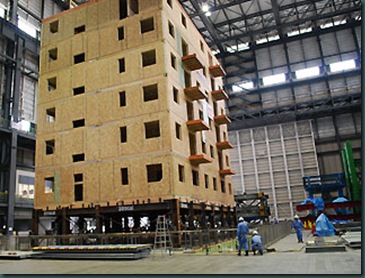
At midnight in Japan on Tuesday, July 14, one of the worst earthquakes in human history took place in Miki City.
But the massive quake — which measured a 7.5 on the Richter scale — only struck one building, a seven-story wooden structure exposed to a simulated earthquake inside a Japanese laboratory. Happily for the U.S. engineers who designed the building, it did not fall down.
The full-scale building sat on a metal shake table that rocked it violently back and forth.
The table, designed to hold up to 2.5 million pounds, reproduced forces based on those recorded at a 1994 earthquake at Northridge, Calif., but scaled up by 180 percent to simulate an earthquake so violent it would only occur on average once every 2,500 years.

"We have more hungry people in the world, than we ever had in the history of human kind." | EarthTrends

"After decades of progress fighting global hunger, the last few years have seen a precipitous increase in the number of hungry people in the world. Kostas Stamoulis, the Secretary General of the Committee on World Food Security, puts it starkly, "we have more hungry people in the world [today], than we ever had in the history of human kind." The recent trend in hunger, shown in Figure 1, projects a historic high in 2009 with 1,020 million people going hungry every day. (FAO, 2009) "No part of the world is immune. All world regions have been affected by the rise of food insecurity," states FAO's Director-General Jacques Diouf. Two years ago the hunger rate also began to rise; meaning the number of hungry people grew faster than world population. These latest figures are not encouraging for the Millennium Development Goal of halving, between 1990 and 2015, the proportion of people who suffer from hunger.
Tuesday, 14 July 2009
Save the Planet – Manchester Report

Manchester Report: Carbon capture plants part-fired with wood
Staffan Gortz explains the potential of carbon capture and storage plants that burn a mix of coal and wood
Manchester Report: Adding lime to the sea Tim Kruger explains how putting lime into the oceans could stop or even reverse the accumulation of CO2 in the atmosphere
Manchester Report: Thorium nuclear power Kirk Sorensen explains how the nuclear energy fuel thorium could replace coal to meet our energy needs
Manchester Report: Energy bonds Tim Helweg-Larsen explains how energy bonds could be used to fund Britain's renewables revolution
Manchester Report: Carbon conversations Rosemary Randall explains how psychology and emotion are key to driving the behavioural change needed to reduce our carbon footprints
Manchester Report: Biochar Laurens Rademakers explains how turning crop wastes and other biomass into charcoal and spreading it on tropical soils can sequester carbon and boost crop productivity
Manchester Report: Giant algae stomachs Mark Capron explains how kelp and algae farmed at sea can be digested in a giant underwater 'stomach' to create fuel and bury carbon
Manchester Report: Hydrogen fuel cell cars Hugo Spowers explains how hydrogen fuel cell-powered cars can lower transport emissions
Manchester Report: Solar power Jeremy Leggett explains how solar photovoltaic technology is poised to become the fastest-growing energy market in the world
Manchester Report: Ceramic fuel cells Mike Mason explains how domestic fuel cells can efficiently and cheaply provide electricity and hot water
Manchester Report: Efficient cooking stoves Peter Scott explains how simple and inexpensive biomass cooking stoves can slash emissions, save forests and avoid lung disease
Manchester Report: Cloud-making ships Stephen Salter explains how ships spraying minuscule droplets of seawater into the air could create clouds that would reflect more solar energy and reverse global warming
Manchester Report: Regenerating grasslands Tony Lovell explains how grazing cattle in a way that imitates the movements of wild herds could lock huge quantities of CO2 into the world's dry soils
Manchester Report: Concentrated solar power Gerry Wolff explains how concentrating solar power in deserts could supply enough electricity to power the whole of Europe
Manchester Report: New indicators of human development Andrew Simms explains why we need to stop measuring the success of our economy and develop new indicators that reflect the ecological efficiency with which we deliver long and happy lives
Latest environment video | Environment | guardian.co.uk
Subscribe to:
Posts (Atom)