Sunday, 13 December 2009

China struggles to treat youth net addicts

 image

After Li Congcong’s parents stopped him going to an internet café, the 17-year-old poured pesticide into some cabbage soup. His mother and father were dead within hours after lunch. Mr Li will be more than 30 when he is released from prison.

His story is just one of 30 chilling tales told in Who Took Our Children?, a documentary that recently started showing in Jiyuan, Mr Li’s hometown in the central Chinese province of Henan.

FT.com / China / Society & People - China struggles to treat youth net addicts

Why Britain faces a bleak future of food shortages | Science | The Observer

food 

Britain faces a 'perfect storm' of water shortage and lack of food, says the government's chief scientist, and climate change and crop and animal diseases will add to future woes. Science is now striving to find solutions

Why Britain faces a bleak future of food shortages | Science | The Observer

Thursday, 10 December 2009

'Rare earth'

china-rare-earth-metals-bayan-obo

Could a shortage of mud and minerals, essential to low carbon technologies, curtail the world's plans for a green future?The key to a low carbon future is not negotiations in Copenhagen but mud and minerals in China. All low carbon technologies, from wind turbines to electric cars and low energy lightbulbs, use elements known as 'rare earths'. And 95 per cent of these are found in China. Earlier this year the Chinese decided to restrict export of these essential metals and minerals and now a shortage is predicted which could effect the development of green technologies.

http://www.bbc.co.uk/blogs/newsnight/paulmason/2009/11/rare_earth_the_new_great_game.html

http://news.bbc.co.uk/1/hi/programmes/newsnight/8097845.stm

http://news.bbc.co.uk/1/hi/in_pictures/8097931.stm

http://news.bbc.co.uk/1/hi/programmes/newsnight/8366694.stm

http://www.channel4.com/news/articles/science_technology/aposrare+earthapos+shortage+threatens+green+revolution/3451837

http://www.channel4.com/news/articles/science_technology/rare+earth+shortage+threatens+green+revolution/3451837

'Rare earth' shortage threatens green revolution - Channel 4 News

Tuesday, 8 December 2009

This decade 'warmest on record'

 image

BBC News - This decade 'warmest on record'

Met Office figures confirm noughties as warmest decade in recorded history | Environment | guardian.co.uk

image

The past 10 years have been the warmest in recorded history, according to the UK Met Office.

Figures released today at the UN climate talks in Copenhagen show that despite 1998 being the warmest year on record, the noughties has been the warmest decade recorded in 160 years.

The Met Office also released the raw data from around 1,500 global monitoring stations in an effort to satisfy critics who have demanded that researchers be more transparent with their data in the wake of the email hacking row at the University of East Anglia.

Met Office figures confirm noughties as warmest decade in recorded history | Environment | guardian.co.uk

Monday, 7 December 2009

Big break for Fairtrade as Kit Kat receives certification | Environment | The Guardian

 image

The UK's best-selling chocolate biscuit bar, Kit Kat, is to receive ethical certification through the Fairtrade quality mark, it will be announced today.

After lengthy talks between the UK arm of the Swiss food giant Nestlé and the Fairtrade Foundation, the familiar blue and green logo will appear on the wrappers of Kit Kats in the UK and Ireland from January. Initially the certification will only apply to the larger four-finger Kit Kats but it will be extended to the smaller bars.

Big break for Fairtrade as Kit Kat receives certification | Environment | The Guardian

The arguments made by climate change sceptics

Aimage t the UN climate summit in Copenhagen, 192 governments are aiming for a new global agreement to constrain greenhouse gas emissions and curb human-induced climate change.

But some commentators are unconvinced that rising greenhouse gas emissions are the cause of modern-day warming. Or they say the world is not actually getting warmer - or that a new treaty would hurt economic growth and well-being.

So what are their arguments, and how are they countered by scientists who assert that greenhouse gases, produced by human activity, are the cause of modern-day climate change?

BBC News - The arguments made by climate change sceptics

Sunday, 6 December 2009

Roundtable on Sustainable Palm Oil (RSPO)

 image

In response to the urgent and pressing global call for sustainably produced palm oil, the Roundtable on Sustainable Palm Oil (RSPO) was formed in 2004 with the objective of promoting the growth and use of sustainable oil palm products through credible global standards and engagement of stakeholders.
The seat of the association is in Zurich, Switzerland, while the secretariat is currently based in Kuala Lumpur with a satellite office in Jakarta.
RSPO is a not-for-profit association that unites stakeholders from seven sectors of the palm oil industry - oil palm producers, palm oil processors or traders, consumer goods manufacturers, retailers, banks and investors, environmental or nature conservation NGOs and social or developmental NGOs - to develop and implement global standards for sustainable palm oil.

Roundtable on Sustainable Palm Oil (RSPO)

Copenhagen summit: How climate change will shape these lives | Environment | The Observer

image

These five babies, all born in the last month, will face different challenges on different continents as they grow up, but they have one thing in common, writes Robin McKie. Their fate as adults will be dominated by the shifting weather patterns their parents are starting to confront

Copenhagen summit: How climate change will shape these lives | Environment | The Observer

Copenhagen

Key Players
IPCC
The Intergovernmental Panel on Climate Change was established by the UN in 1988 to provide authoritative assessments of the latest climate change science. Its reports, which are compiled and reviewed by thousands of leading scientists, have provided the basis for international efforts to combat global warming by reducing carbon emissions. The IPCC shared the 2007 Nobel Peace Prize with Al Gore, but critics claim that the panel's structure and origins predispose it to blame global warming on man's actions.


UNFCCC
More than 190 counties have now signed up to the UN's Framework Convention on Climate Change, a treaty drawn up at the Earth Summit in Rio de Janeiro in 1992. The agreement, which laid the ground for legally-binding targets adopted in Kyoto five years later, has also given rise to a permanent UN body of the same name, which coordinates countries' efforts to reduce emissions.

G77
An alliance of 130 developing nations including China and India. The G77 lobbies for the developed world to accept a greater share of the burden for fighting climate change, arguing that strict emission restrictions will hamper the economic growth of poorer nations. It has threatened to scupper any deal at Copenhagen unless the US agrees to meet tough CO2 targets.

LDCF
The Least Developed Countries Fund provides financial support for countries – mainly in Africa – that are deemed most vulnerable to the consequences of climate change. It funds projects to help communities to adapt to threats such as flooding

MEF
Britain is one of 17 members of the Major Economies Forum, a group of the world's largest polluters established by President Barack Obama earlier this year. Intended to foster discussions rather than produce firm agreements, its first communiqué in July offered little policy detail.

Copenhagen climate change conference 2009: timeline

 COP15_LOGO_B_M

Copenhagen climate change conference 2009: timeline - Telegraph

Owning The Weather

 image

Owning The Weather

Global Flood Map

Use the interactive map by entering in any number of inches – the map will show what areas would be flooded or at risk and the left side bar will display the number of people displaced. Click on individual points for current elevation, elevation after sea level rise, and the number and percentage of people losing homes.  Global Flood Map uses NASA satellite data to show the areas of the world under water and at risk for flooding if ocean levels rise. According to the World Meteorological Organization (WMO), sea levels have been rising about 3 mm per year since 1993 – totaling a 200 mm increase (7.87 inches) in global averaged sea level since 1870.

Global Flood Map | World Wide Map of Potential Flooding

Where countries stand on Copenhagen

 COP15_LOGO_B_M

BBC News - Where countries stand on Copenhagen

Sunday, 29 November 2009

World Cup 2010 Football to footprints: World Cup's carbon impact

 image

Africa's first football World Cup will generate 2.75m tonnes of carbon emissions, one of the biggest environmental impacts of any sporting event in history, a study has found.

The finals in South Africa next year are expected to have a carbon footprint eight times that of the 2006 World Cup in Germany, even before long-haul international travel is taken into account.

The main reasons for the discrepancy are the vast distances between South Africa's host cities and the lack of a green transport infrastructure.

The estimated output from South Africa is 896,661 tonnes of carbon dioxide, according to the optimistically entitled Feasibility Study for a Carbon Neutral 2010 Fifa World Cup, commissioned jointly by the South African and Norwegian governments. Another 1,856,589 tonnes will result from fans travelling from around the world, making the World Cup's footprint the biggest of any major event aiming to be "climate neutral", the report said.


Football to footprints: World Cup's carbon impact | Environment | The Guardian

Biggest storm of the year sweeps Britain off its feet with flooding, gales and lightning strikes | Mail Online

 image

image

Biggest storm of the year sweeps Britain off its feet with flooding, gales and lightning strikes | Mail Online

Watch your waste during the season of overindulgence | Money | The Observer

 image As a nation we throw out £12bn worth of food and drink every year – an average of £480 per household. This increases to £680 for families. We let £6.7bn worth go off, either completely untouched or opened but not finished, while the remaining £4.8bn of wastage comes from us cooking or preparing too much.

Christmas contributes a hefty whack to that sum. Families spend £182m on Christmas lunch or dinner, and increase their grocery spend by about 20% in the Christmas period, according to market researchers Nielson. Households (including families) spend £63m on turkey, £31m on stilton and cheddar, £15m on Christmas pudding, £14m on Christmas cake and £124m on bacon and sausages.

Watch your waste during the season of overindulgence | Money | The Observer

'I want an education. I want to change my life' | Katine | The Observer

image

Looking back, Simon identifies two catastrophic moments that conspired to ruin his academic prospects. The first was in 2002 when his father abandoned the family home, never to return, leaving a pregnant wife and eight children.

The second was when his uncle, who sponsored him through school after his father's disappearance, unexpectedly announced that he could no longer afford to pay the fees, forcing Simon to give up his education. Since that day two years ago he has stayed at home (a huddle of four thatched mud-brick huts), helping to tend the family's fields. He is educated enough to feel frustrated by his fate, but not sufficiently qualified to have many other options for the future.

Christmas appeal 2009: 'I want an education. I want to change my life' | Katine | The Observer

CumbriaFloods Nov 2009 « GeogBlog@IoE

image

Emergency rescue workers wade through a flooded street in Cockermouth, in north-west England. Photo source: AFP

Thanks to Dave Rayner for this set of very useful links

http://geogblogatioe.wordpress.com/2009/11/24/lake-district-floods-nov-2009/

Wednesday, 25 November 2009

Cumbria Floods 2009- How the heaviest rainfall happened

In the hours before floods swept through Cumbria, the heaviest rain ever recorded in Britain fell on a hamlet in the county. Philip Eden unpicks the unique combination of factors which made this happen.

image

1. A 'conveyor' of warm, very moist sub-tropical air was carried towards Britain from south of the Azores

2. When this mass of warm air - which holds more moisture than cold air - was blown by high winds over Cumbria's mountains it cooled, allowing the moisture to condense as heavy rain

3. What made matters worse was that the weather system, which extended south-west from Britain for thousands of miles into the Atlantic, got stuck over the hills of Cumbria and southern Scotland

4. The falling heavy rain entered the region's rivers, which were forced to carry exceptionally high water loads

5. This led to significant flooding, especially at their confluences, such as in Cockermouth

BBC News - How the heaviest rainfall happened

Rising sea levels hit Maputo, Rotterdam

 image

When people talk about the impact of rising sea levels, they often think of small island states that risk being submerged if global warming continues unchecked.

But it's not only those on low-lying islands who are in danger. Millions of people live by the sea - and are dependent on it for their livelihoods - and many of the world's largest cities are on the coast.

By 2050 the number of people living in delta cities is set to increase by as much as 70%, experts suggest, vastly increasing the number of those at risk.

To shed light the impact of rising sea levels, we are taking a close look at two very different cities, Rotterdam and Maputo , and their varying responses to the problem.

BBC News - Climate change: Rising sea levels hit Maputo, Rotterdam

November 2009 flooding

 image

November 2009 flooding

The Olympic Park View Tube

imageThe Olympic Park can today boast its first completed venue (assuming we're not counting an electricity substation as a venue). It's a viewing platform built from shipping containers, in the best Lea Valley tradition. The brightly coloured protuberance is hard to miss up on the Greenway, an old cycle path that cuts through the Park and provides the best opportunities to watch construction. The new building acts as a viewing point (slightly cringerly, they're calling it the View Tube), cafe and a community centre (presumably in legacy, right? - the only communities we've ever seen on the Greenway have beaks).


Map http://www.flickr.com/photos/dgeezer/4110866504/

In Pictures: The Olympic Park View Tube - Londonist

Sunday, 22 November 2009

Tropical Rainforest

Cumbria FLOODS November 2009

Hurricane Katrina: It was not an act of God - Americas, World - The Independent

 image The US government could be facing a bill running to hundreds of billions of dollars after a federal judge ruled that failures by the US Army Corps of Engineers were responsible for the worst flooding that followed Hurricane Katrina.

The Corps – which is responsible for the design and upkeep of the levees surrounding New Orleans – had argued that Katrina was a once in a 100-year storm, an act of God, that had overwhelmed its hi-tech flood protection system. However, Judge Stanwood Duval Jr brought the debate back down to earth, blaming authorities for "negligence" in a strongly worded ruling that accused the Corps of "insouciance, myopia and short-sightedness".

Hurricane Katrina: It was not an act of God - Americas, World - The Independent

Thursday, 19 November 2009

Top 100 Tools for Learning 2009

Check out this SlideShare Presentation:

Japan's hi-tech bid to boost food

image

Japan is only growing 40% of its food needs, leaving it dependent on imports. In an effort to combat the problem, a Japanese company is experimenting with a "hi-tech" approach to farming.

BBC NEWS | World | Asia-Pacific | Japan's hi-tech bid to boost food

Educating women key to climate change

Channel 4 news

99 Stunning Photographs

 image

image

Mix Collection of 99 Stunning Photographs to Refresh Your Mind | Inspiration | instantShift

Tuesday, 17 November 2009

Sunday, 15 November 2009

Brazil celebrates 45% reduction in Amazon deforestation | Environment | The Guardian

image

The Brazilian government yesterday announced a "historic" drop in the deforestation of the Amazon, weeks before world leaders meet in Copenhagen for climate change talks.

Brazilian authorities said that between August 2008 and July this year, deforestation in the world's largest tropical rainforest fell by the largest amount in more than 20 years, dropping by 45% from nearly 13,000 square kilometres to around 7,000 square kilometres (5,000 square miles to 2,700 square miles).

Brazil celebrates 45% reduction in Amazon deforestation | Environment | The Guardian

Green belt threat to 27 towns and cities revealed - Telegraph

image

An analysis by The Sunday Telegraph has identified twenty-seven towns and cities which have been chosen by Whitehall planners as locations where parts of the Green Belt should be reviewed or sacrificed to make way for a massive programme of house building.

Green belt threat to 27 towns and cities revealed - Telegraph

Safe Drinking Water Is Essential

water

The Global Health and Education Foundation strives to advance the health and well-being of the world by improving access to clean water, public health and primary care, basic education, and economic development opportunities. The Global Health and Education Foundation’s inaugural operating foundation, WaterLeaders, is dedicated to alleviating the safe drinking water crisis. For more information, please visit www.waterleaders.org.

Safe Drinking Water Is Essential

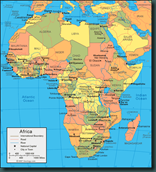
d-maps.com : free blank maps, free outline maps

 image


World and oceans
Africa
Americas
Asia
Europe
Mediterranean sea
Oceania
Historical maps

d-maps.com : free blank maps, free outline maps

BBC NEWS | World | Africa | China's chequebook draws African nations

image

China sees vast opportunity in Africa. Since 2001 total trade has grown tenfold - last year it stood at $107bn (£63.7bn).Add to that the significant sums of financial aid and direct investment that are on offer and you can see why the representatives of the 50 African states who have travelled to the Egyptian resort of Sharm el-Sheikh are extremely keen to hear what China has to say.

BBC NEWS | World | Africa | China's chequebook draws African nations

Wednesday, 11 November 2009

Oxfam presents interactive documentary on impact of climate change in Bangladesh

Oxfam launches landmark online interactive documentary that captures the shocking moment when cyclone Aila swept over Bangladesh in May, killing hundreds and causing chaos and devastation for the community. Featuring extraordinary footage of the cyclone's trail of destruction, the e-documentary allows the audience to chose its own journey through lives of the Gabura villagers, illustrating the harsh reality of climate change on some of the world's poorest people. Just click on the Take action button at the end of the introductory film
Read Barbara Stocking's blog about the Gabura interactive

Oxfam presents interactive documentary on impact of climate change in Bangladesh | Environment | guardian.co.uk

Tuesday, 10 November 2009

How did Greggs conquer the High Street?

image

While others have floundered in the recession, Greggs the baker has seen its fortunes rise and rise. Now it's planning to open another 600 stores.

BBC NEWS | Magazine | How did Greggs conquer the High Street?

Corporate Connection

 image

Co rporate Connection v.2, part 1, 2003 on Flickr - Photo Sharing!

Saturday, 7 November 2009

Population Pyramid

Thursday, 5 November 2009

1minutetosavetheworld

 image

1minutetosavetheworld

Wednesday, 4 November 2009

BBC NEWS | Special Reports | copenhagen


image


WHAT IS THE COPENHAGEN SUMMIT?

The UN Climate Change Conference known as COP15 takes place from 7 to 18 December.

More than 15,000 officials will attend from 192 countries, including some heads of

state.It is hoped countries will agree on:the main points of a deal to follow the Kyoto protocol, which expires in 2012;new targets for industrialised nations to reduce carbon emissions;

new targets for poorer nations to limit greenhouse gases;funding for developing countries to reduce emissions and adapt to a changing climate

Q&A: The Copenhagen climate summit

BBC NEWS | Special Reports | copenhagen

Why Africa welcomes the Chinese

image image

There is a debate among geopolitical and economic commentators about the merits of Chinese versus western involvement with Africa. One argument is that Chinese investment is exploitative and undermines the development of democracy and human rights on the continent. Others view the matter in terms of competition, arguing that China is encroaching on the decades-long monopoly of the west over Africa's natural resources.Neither of these viewpoints addresses the core issues. First, major players in global investment and development are discussing Africa without engaging its people as equal partners. Second, Africans are not seen to be proactive in setting their own priorities and terms of engagement.Development aid, fashioned on this skewed relationship, has long been a key source of income for the continent. While helpful, aid has not delivered sustainable development. It is clear that trade and investment bring greater opportunity for wealth creation. Africa welcomes investment, from the east and west, north and south, and Rwanda is no exception. We want investment that offers skills and jobs, encourages entrepreneurship, and provides the opportunity to improve millions of lives.

This call for investment and trade rather than traditional aid does not mean the latter's contribution to addressing poverty is not recognised. However, the fundamental problem with the current development aid practice is the danger countries face as they become perpetually reliant on handouts.So what should those who give aid, and those who receive it, focus on? The primary purpose of aid should ultimately be to work itself out, leaving a positive legacy behind. Aid should also be used to create opportunities for trade, enhance self-sufficiency and assist with the development of a robust private sector to attract investment. In many countries, for example, aid offers resources such as fertilisers for free. The intention is good but this often prevents local businesses from being able to provide these goods competitively. Given the choice, people would prefer to work and provide for themselves, rather than receive charity. Africans want self-determination and dignity.

Our continent, like others, requires investment to further its development. Efforts to pursue this need not be seen as a threat to the strengthening of democracy. Of course, African leaders should take good governance and human rights seriously – and most do. This is not – and should not be – because anybody else tells us to, or in return for investment, but because it is the right thing to do. The presence of Chinese investment in Africa does not discharge governments of their responsibilities any more than its presence in the EU or US should erode human rights there.

In Rwanda, we have worked hard to tackle the root causes of corruption and ensure there is a strong case for attracting investment. This programme of reform is yielding results and has been recognised by the World Bank's 2010 Doing Business Index, which saw Rwanda jump from 143rd to 67th position in one year, making it the world's leading reformer. In 2008, Rwanda's GDP grew at 11.2%, and despite the global financial crisis our 2009 projections give us cause for optimism. Wages in key export sectors have grown more than 20% annually over the last eight years, and all these developments have occurred while the percentage of our national budget funded by aid has been reduced by half since 2001.Ultimately, Africa's relationship with its international counterparts should be red

Defined. For too long, we have not been able to trade fairly with Europe and the US; trade barriers and subsidies, particularly in agriculture, have protected external markets from African products, hindering our ability to trade as equals. Investment and trade with willing countries, including intra-African trade, helps the continent to build a much-needed culture of entrepreneurship and development.

All would benefit if the world focused on increasing investment in Africa, and if Rwanda and the rest of the continent worked to establish more equitable international partnerships. A trade relationship built on this new approach would be more helpful in reaching what should be our common goal: sustainable development, mutual prosperity and respect.

Why Africa welcomes the Chinese | Paul Kagame | Comment is free | The Guardian

A people's history of the internet: from Arpanet in 1969 to today | Technology | guardian.co.uk

image

To ma rk the 40th anniversary of the first stirrings of the internet we asked you to tell us your experiences of life online. Hundreds of you responded, and here we present an interactive documentary of your stories and videos, alongside our own research and interviews with key figures (About this project)

image

A people's history of the internet: from Arpanet in 1969 to today | Technology | guardian.co.uk