


Earthquakes View material
Ecosystems, farming & migration View material
Energy and resources View material
Flooding View material
Managing ecosystems View material
Migration View material
National Parks View material
Sustainable Development View material
Tropical Storms View material
Tsunami View material
Volcanoes


The Local Futures Group is a research and strategy consultancy that provides a geographical perspective on social and environmental change, set within a 21st century knowledge economy. We introduce this perspective into public policy and corporate strategies, both in the UK and internationally.
SROLL DOWN to Local Futures Barometer Archive
PDF Reports on Well Being; transport; Local Amenities; Labour Market; Education; Employment growth; Demography; Business and Enterprise; Housing Affordability; Health Barometer; Deprivation Barometer; Crime Barometer; Inequality in knowledge economy; First time buyers affordability; Local carbon footprint; Migrant Labour; Local deprivation; Skills; Life expectancy;Access to services and amenities; Geography of crime; Geography of Carbon Footprint;
Uploaded on authorSTREAM by GeoDave
Thanks very uch to Dave Rayner for sharing this


Andrew Marr takes to the skies exploring Britain from above.
An epic journey revealing the secrets, patterns and hidden rhythms of our lives from a striking new perspective.
Join host Andrew Marr as he discovers how each and every one of us is interconnecting making Britain what it is today.
Britain looks very different from the skies. From a bird's eye view of the nation, its workings, cities, landscapes and peoples are revealed and re-discovered in new and extraordinary ways.
Cutting edge technology allows you to see through cloud cover, navigate the landscape and witness familiar sights as never seen before
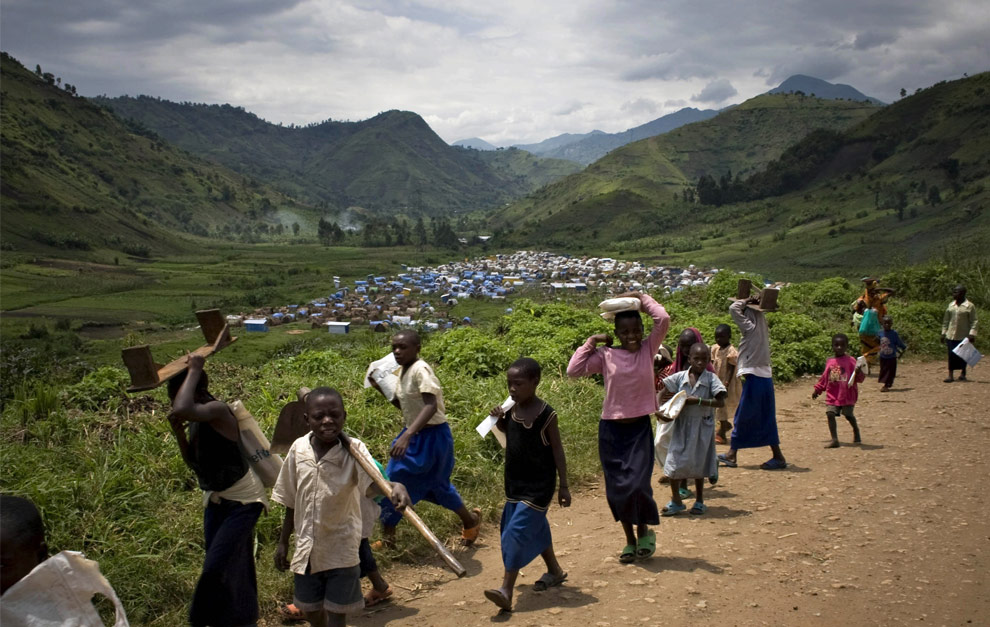
In the Democratic Republic of Congo (DR Congo), fighting continues among various rebel armies, tribes, the Congolese army and U.N. forces. The dire situation has prompted the government of DR Congo to ask for help, and invite the armies of neighboring South Sudan, Rwanda and Uganda to enter their territory on several joint operations, to hunt down and pacify or dismantle at least two major rebel armies operating in the lawless border region. Rebel leader Laurent Nkunda was captured in January by Rwandan forces, but his army is still active - and Ugandan troops are seeking out the rebel Ugandan Lord's Resistance Army, which has taken refuge in eastern DR Congo. Once more, caught in all of this are the local civilians, terrorized by fleeing and advancing troops of all kinds. Reuters photographer Finbarr O'Reilly has been traveling through the area, capturing some amazing photographs of the people involved. (38 photos total)
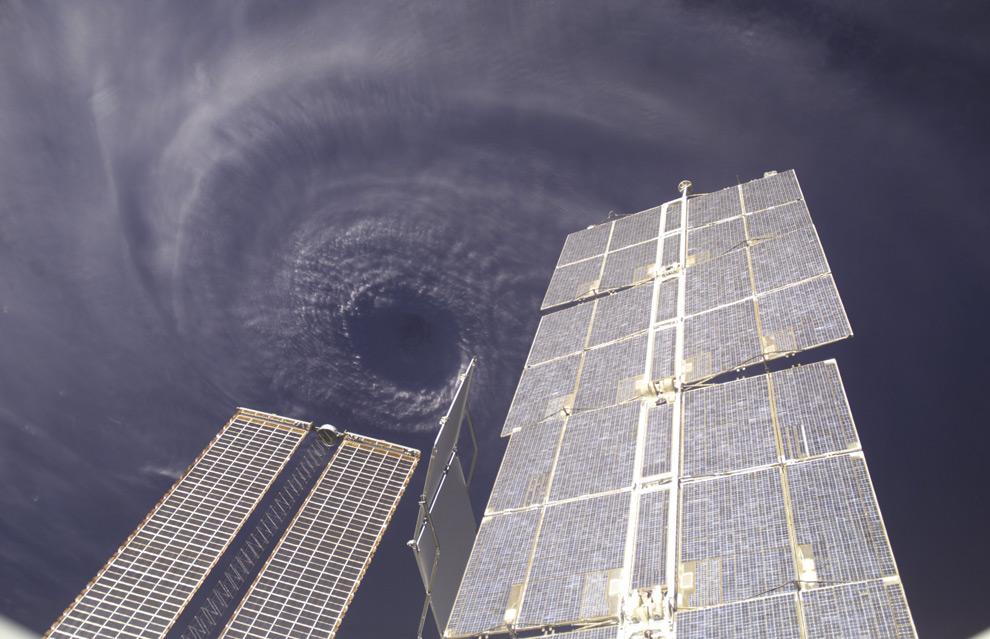
Hurricane Ike just rolled across Cuba, and soaked parts of Haiti - both regions still reeling from recent Hurricane Gustav. Ike appears to be weakening now, but is headed tward the Gulf Coast of the U.S., and may yet strengthen. The crew aboard the International Space Station was able to take a photo of Ike from 220 miles overhead last Thursday - one in a long series of great NASA photographs of hurricanes from space. Here are some of the best, from the past several years. (25 photos total)

The Challenge
Only 3% of water on earth is freshwater, about 2/3 of this amount is frozen in glaciers and polar ice caps. The world faces considerable challenges in managing this amount equitably for a growing world population.
The IUCN Water Programme seeks to bring together its extensive network of members, scientific commissions, government and private sector partners to sustainably develop solutions and initiatives to preserve our water resources.
Where we work section has CASE STUDIES


The country profiles and regional overiews describe the state of the water resources, agricultural water use and management in 138 countries and 5 regions in Africa, Asia, Latin America and the Caribbean. They underline the particularities in each country and region and the problems met in the development of the water resources and, in particular, irrigation. They summarize the irrigation trends and perspectives for water management in agriculture as described in the literature available. The methodology used to prepare the country profiles and the regional overviews is described in the background document below.

Earth Hour 2009 is set to switch off the globe. Already 538 cities in 75 countries which is double the number of countries that participated in 2008, are committed. With hundreds more cities expected to sign up to switch off in the coming months, Earth Hour 2009 is setting the platform for an unprecedented global mandate for action on climate change.

Thanks to Mr Chambers St Ivo School Geography Department for this excellent case study
GeoBytesGCSE: Case Study of Rapid Economic Growth - South Korea (An NIC)

The arid states of America's south-west have been getting drier in recent years.Since 2000, the Colorado River - which provides water for seven US states in the region - has carried less water than at any time in recorded history. And while the drought is worsening, the demand for water in this booming part of the country is increasing. The states dependent on the Colorado River for their water are seeking solutions to their water shortage, with some suggesting that importing water from far-flung states - or even towing icebergs down from the Arctic - could solve the problems.
BBC NEWS | World | Americas | The fight for water in North America

Isa earns a hard living pushing a heavy water cart around the rutted streets of the suburbs of Nigeria's capital, Abuja.
He is one of tens of thousands of water vendors who deliver jerry cans full of water to houses built without any kind of sanitation


NEW - Free Ordnance Survey digital maps at all scales. See it to believe it! Click HERE

"The interest in the water footprint is rooted in the recognition that human impacts on freshwater systems can ultimately be linked to human consumption, and that issues like water shortages and pollution can be better understood and addressed by considering production and supply chains as a whole,” says Professor Arjen Y. Hoekstra, creator of the water footprint concept and scientific director of the Water Footprint Network. "Water problems are often closely tied to the structure of the global economy. Many countries have significantly externalised their water footprint, importing water-intensive goods from elsewhere. This puts pressure on the water resources in the exporting regions, where too often mechanisms for wise water governance and conservation are lacking. Not only governments, but also consumers, businesses and civil society communities can play a role in achieving a better management of water resources."
Chocolate contains cocoa, and when you buy Cadbury chocolate here in the UK, it links you straight to the cocoa farmers of Ghana, in Africa.

In this module you can learn about Ghana, how cocoa is grown there and the lives of the cocoa farmers.
You can also read about how Cadbury is working with cocoa farmers to improve life in cocoa villages.
A proposed shortlist of schemes to harness renewable energy from the tides of the Severn estuary has been announced by the UK Government.

Britain's environmental movement was yesterday presented with its starkest choice yet: whether or not to support the world's largest-ever renewable energy project which will result in unprecedented ecological damage to one of our most important natural habitats.
The giant £20bn Severn barrage, which would stretch 10 miles from Lavernock Point near Cardiff to Brean Down near Weston-super-Mare, would harness the tides to generate up to 5 per cent of the UK's electricity needs – the equivalent of eight typical coal-fired power stations. This is crucially important in the fight against climate change.
But environmentalists fear that by blocking the Severn estuary completely, the barrage would destroy vast areas of mudflats and mashes, which are vital feeding grounds for tens of thousands of wading birds, and prevent migratory fish such as salmon and eels from ascending rivers to spawn. Other environmentalists think such a large project would divert resources away from other key renewable technologies such as wind power.
Yesterday the barrage appeared on a shortlist of five renewable energy schemes for the Severn estuary indicating that the project, which the Government is known to favour, is moving closer to formal acceptance. The shortlist will now be the subject of a public consultation and a final decision will be taken by 2010.
But the proposal is causing real difficulties for Britain's green movement, whose members are united in the need to take action against global warming, yet view with deep dismay the unprecedented ecological damage a Severn barrage would undoubtedly bring about. The dilemma could not be more acute: on the one hand, the prospect of more renewable energy from one place than is currently produced in the entire UK; on the other, the virtual wiping out of one of Britain's most important wildlife sites. The dilemma will only increase as the imperative of countering climate change with major developments runs up against the damage to the natural world which such large-scale schemes may cause.
The Government's official green advisers, the Sustainable Development Commission, thinks the barrage should be built if it can pass two tests: that new wildlife habitats can be created to compensate for those lost and that the project remains in public ownership. The SDC favours it because with the Severn having the second highest tidal range in the world – the difference between high and low tides can be as much as 45ft – the energy-producing potential of a barrage is enormous, capable of generating more than eight gigawatts of power.
However, Friends of the Earth believe it would simply be too damaging and divert too much money that could be better spent fighting climate change in other ways. Greenpeace agrees it has potential but thinks the Government should give priority to wind power. The Royal Society for the Protection of Birds, the Wildlife Trusts and the Government's own wildlife watchdog, Natural England, are all concerned over the impact on wildlife.
"It is hugely disappointing to see the Government still pushing forward with the environmentally destructive option of a Cardiff-Weston barrage," said Martin Harper, the RSPB's head of sustainable development.
"Climate change threatens an environmental catastrophe for humans and wildlife and we urgently need to find low and zero carbon alternatives to our insatiable appetite for fossil fuels, so harnessing the huge tidal power of the Severn has to be right. But it cannot be right to trash the natural environment in the process. The final scheme must be the one that generates as much clean energy as possible while minimising harm to the estuary and its wildlife. We know the Cardiff-Weston Barrage would destroy huge areas of estuary marsh and mudflats used by 69,000 birds each winter and block the migration routes of countless fish."
Natural England's chief executive Helen Phillips said yesterday: "Tackling climate change requires us to make a step change in the way we think about renewable energy but we have to ensure that the decisions we make stand the test of time and do not leave a legacy of environmental destruction in their wake."
There is little doubt that a barrage would destroy more wildlife habitat than any other British construction project in modern times. The Severn Estuary, where the celebrated naturalist Sir Peter Scott founded Slimbridge, the wildfowl refuge which became one of the world's most famous nature reserves, provides an 86,000-acre feeding ground for wild swans, geese and many thousands of wading birds, such as dunlin, turnstone, oystercatcher and ringed plover, from all over Europe.
Under EU wildlife habitat laws, if the Government were to go ahead, it would have to find alternative compensatory habitat – mudflats and marshes – which might be as much as 40,000 acres, and which might cost anything up to £3bn.
But that is unlikely to hold the Government back, such will be the temptation to grab that massive 5 per cent renewable energy boost from a barrage – for in December ministers took on the enormous obligation, in an EU-wide deal, of sourcing 20 per cent of total UK energy demand from renewables by 2020. Twenty per cent of total energy (which includes heating and transport) means finding about 40 per cent of electricity from renewables – nearly 10 times the current figure of about 4.5 per cent.
The Herculean size of that task means the Government is very likely to go for the barrage, especially as the onshore wind industry is suffering strongly from the rise in the euro against the pound, meaning turbines made in Germany and Denmark are now about a third dearer than they were a year ago.
Apart from the main barrage, four other shortlisted schemes were announced by the Secretary of State for Energy and Climate Change, David Miliband, yesterday. They are: Shoots barrage, further upstream which would generate around 1GW; Beachley barrage, an even smaller scheme just above the river Wye, which would generate around 625MW; Bridgwater Bay lagoon, a proposal which would impound a section of the estuary on the coast from east of Hinkley Point to Weston-super-Mare, which could generate 1.36GW and Fleming lagoon, a similar scheme which would generate the same amount of power from a section of the Welsh shore between Newport and the Severn road crossings.
Mr Miliband acknowledged fighting climate change involved "tough choices" and said: "The five schemes shortlisted are what we believe can be feasible but this doesn't mean we have lost sight of others. Half a million pounds of new funding will go some way to developing technologies still in their infancy, like tidal reefs and fences. We will consider the progress of this work before any final decisions are taken."
A swelling global population, changing diets and mankind's expanding “water footprint” could be bringing an end to the era of cheap water. The warnings, in an annual report by the Pacific Institute in California, come as ecologists have begun adopting the term “peak ecological water” — the point where, like the concept of “peak oil”, the world has to confront a natural limit on something once considered virtually infinite. The world is in danger of running out of “sustainably managed water”, according to Peter Gleick, the president of the Pacific Institute and a leading authority on global freshwater resources.

Kibera is situated in Nairobi's SouthWestern Peri-urban zone approximately seven kilometres from the Nairobi City Centre. Kibera as a whole is an informal settlement comprising of ten villages covering approximately 250 hectares of land with an estimated population of about 500,000 people. That gives an average population density of 2000 people per hectare although some villages are more crowded than others. The villages are Lindi, Kisumu Ndogo, Soweto, Makina, Kianda, Mashimoni, Siranga, Gatuikira, Laini Saba and the newly founded Raila village.

The continent of Antarctica is warming up in step with the rest of the world, according to a new analysis.
Scientists say data from satellites and weather stations indicate a warming of about 0.6C over the last 50 years.

Race Against Global Poverty is an interactive educational quiz game from DFID. Aimed at young people aged 11 to 16, the online game makes learning about the developing world fun and stimulating.

Featuring attractive animation and animal characters, it increase players' understanding of development through questions about world poverty and DFID's work to tackle it. The game is one of a range of activities that DFID is providing to young people to raise their awareness of development issues and get them involved in the fight against poverty.  Play the game online here.


By the year 2000, half the world's poor were in Africa.
It is the only continent to have become poorer in the past 25 years.
This is because of several reasons:

The Places project is our way of saying thank you to all our members who’ve taken the time to put their gorgeous photos and video on the map. Browse the whole globe, from your hometown to your favorite place, or places you’ve never even heard of...

Three months after the end of the games, new figures show the "Olympic Effect" has been short-lived and hotels are empty, industrial output has fallen and the streets are quiet.
Much of the pain is due to the worldwide financial crisis – and in some cases due to brave decisions by the government to keep polluting industries shut to spare the environment.
But even the biggest single symbol of the modern rise of China, the "Bird's Nest" National Stadium, stands forlorn, largely unused except for a shrinking number of tourists.
Repeat photography is a technique in which a historical photograph and a modern photograph, both having the same field of view, are compared and contrasted to quantitatively and qualitatively determine their similarities and differences. The following sections depict how this technique was used at a number of locations in Alaska, including Glacier Bay National Park and Preserve, Kenai Fjords National Park, and the northwestern Prince William Sound area of the Chugach National Forest, to document and understand changes to glaciers and landscapes as a result of changing climate. Through analysis and interpretation of these photographic pairs, information is extracted to document Alaskan landscape evolution and glacier dynamics for the last century-and-a-quarter on local and regional scales and the response of the Alaskan landscape to retreating glacier ice.
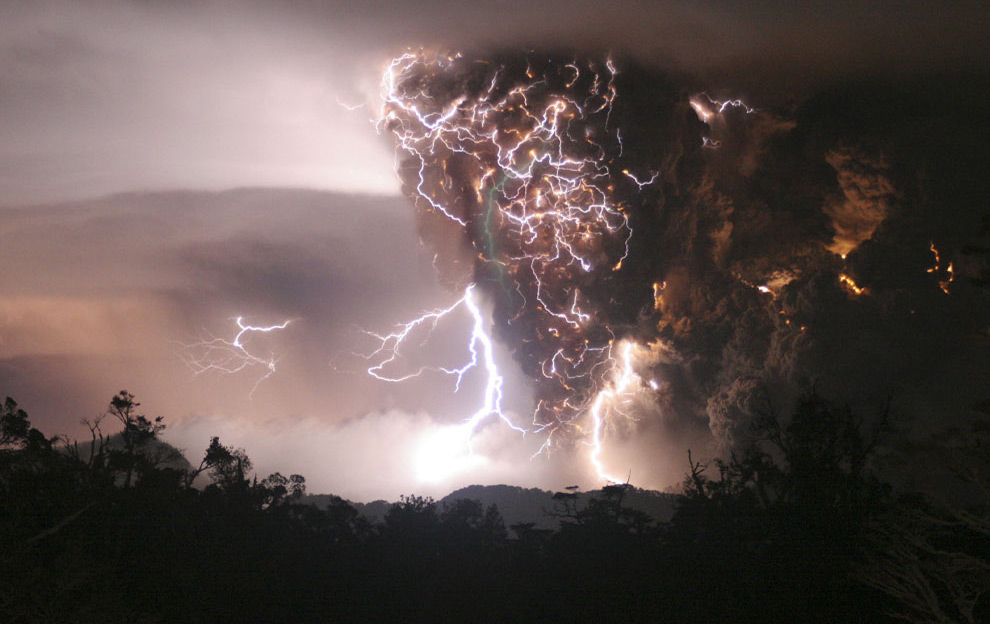
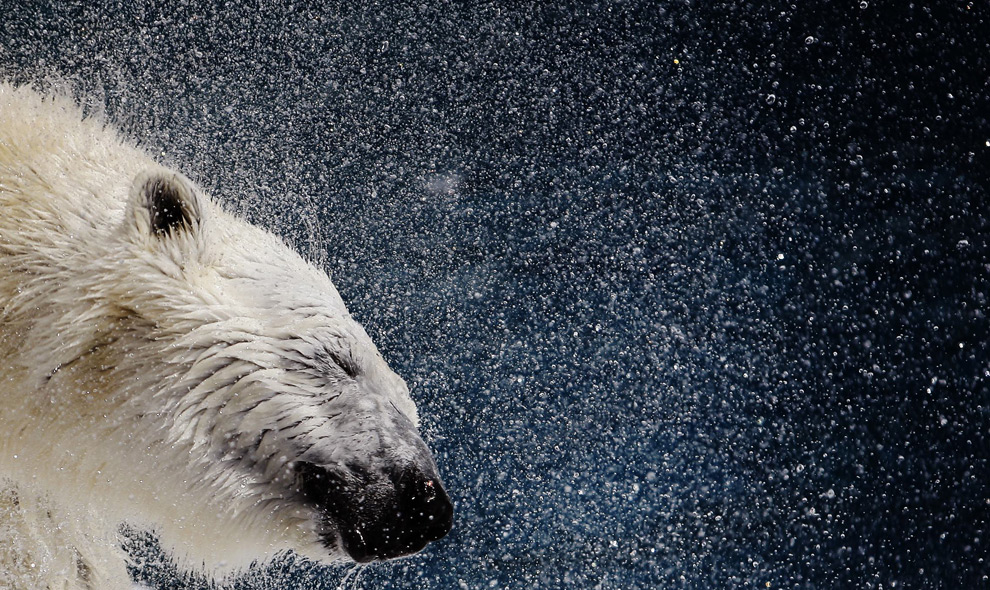
2008 has been an eventful year to say the least - it is difficult to sum up the thousands of stories in just a handful of photographs. That said, I will try to do what I've done with other photo narratives here, and tell a story of 2008 in photographs. It's not the story of 2008, it's certainly not all stories, but as a collection it does show a good portion of what life has been like over the past 12 months.

This unit of work teaches resilience in the context of water and flooding. It delivers an understanding of awareness, preparedness and knowledge of what actions should be taken in the event of flooding; and of how changing physical and human processes bring about flooding in the first place. This unit nurtures vital skills for what might be termed "environmental citizenship", giving life-long advice about the protection of homes - and the need to always keep an open and inquiring mind that can identify risk.
The first half of the unit deals with flood risk in the UK - a key aspect of life on these islands. Basic Environmental Agency rules for adults (be aware, be prepared, know how to act) are looked at. The causes of flooding are then examined, including human accidents (plumbing). As part of the work, a local risk assessment should be conducted for home or school, using the engaging technique of flood-depth analysis - working out what losses different levels of water could bring to a room or building!
The second half of the unit returns to the theme of resilience and explores in greater depth the steps that students' parents or guardians can take in protecting their homes from possible flood or storm damage. Flood kits and flood-proofing techniques are examined before moving on to think about flood warnings. A close look is taken here at how new digital technologies can help get warnings to people quickly. There are plenty of opportunities for role playing also, through thinking about vulnerable people, such as the hard-of-hearing, for whom text message warnings have been a real blessing. Greater cultural understanding is fostered.
The unit closes with a look at the interdependence that exists between different groups of people and businesses living on flood plains. Using the metaphor of "river team players", students will think about how local groups can work together to try and build community resilience to flooding (becoming sensitive to the risks associated with some land-use changes). Attention is thus paid to the citizenship dimensions of flood management.
The UK has less available water per person than most other European countries. London is drier than Istanbul, and the South East of England has less water available per person than the Sudan and Syria. Water is scarce in parts of Scotland, Wales and Northern Ireland as well as in England - large scale drought is already occurring in the UK, with the lowest rainfall, groundwater and reservoir levels for decades. Each person in the UK currently uses about 150 litres of water every day. This has been rising by 1% a year since 1930. This consumption level is not sustainable in the long-term.
f we do not take action now, climate change, population shifts and behaviour mean the UK will face increased water stress in the future.


It is a statement of the obvious that water is the most critical factor related to drought. Whilst lack of water is the primary cause of drought, there are a large number of factors which exacerbate and intensify the effects of lack of water. If these factors, many of which have little to do with water per se, are adequately managed, the consequences of the lack of water can be greatly reduced. For this reason drought management policy must take into account a wide variety of factors.
"In popular usage, "scarcity" is a situation where there is insufficient water to

Water is essential for human survival and well-being and important to many sectors of the economy. However, resources are irregularly distributed in space and time, and they are under pressure due to human activity.

Water metering in areas affected by serious water shortages is being proposed by the government and the Environment Agency.
A preliminary map of "water stressed" parts of England has been produced, with the whole of the South East being classified as "serious".

The alarming extent of water scarcity across the world is detailed in a map compiled by a leading environmental think tank.
It shows two key types of scarcity; water is said to be either physically scarce or economically scarce.

Natural disasters killed over 220,000 people in 2008, making it one of the most devastating years on record and underlining the need for a global climate deal, the world's number two reinsurer said Monday. Skip related content
http://uk.news.yahoo.com/18/20081229/tsc-natural-disasters-killed-o...
http://www.munichre.com/en/press/press_releases/2008/2008_12_29_pre...
http://www.munichre.com/en/ts/geo_risks/default.aspx
http://www.munichre.com/en/ts/geo_risks/natcatservice/annual_statis...
http://www.munichre.com/en/ts/geo_risks/natcatservice/long-term_sta...
http://www.munichre.com/en/ts/geo_risks/natural_catastrophes_and_ri...
Over 1 billion people don't have access to clean drinking water; more than 2 billion lack access to adequate sanitation; and millions die every year due to preventable water-related diseases. Water resources around the globe are threatened by climate change, misuse, and pollution. But there are solutions: we can provide for people's basic needs while protecting the environment by using innovative water efficiency and conservation strategies, community-scale projects, smart economics, and new technology.
While the world's population tripled in the 20th century, the use of renewable water resources has grown six-fold. Within the next fifty years, the world population will increase by another 40 to 50 %. This population growth - coupled with industrialization and urbanization - will result in an increasing demand for water and will have serious consequences on the environment.
More then one billion people in the world lack access to clean water, and things are getting worse. Over the next two decades, the average supply of water per person will drop by a third, possibly condemning millions of people to an avoidable premature death. In this free web focus, Nature presents an analysis of the global water crisis with a collection of news, features and interactive graphics.

The amount of water in the world is finite. The number of us is growing fast and our water use is growing even faster.
A third of the world's population lives in water-stressed countries now. By 2025, this is expected to rise to two-thirds.
There is more than enough water available, in total, for everyone's basic needs.

Use 'Magicmap' to help students understand how to use map symbols and grid references.
Climate change: The carbon atlasNew figures published today confirm that China has overtaken the US as the largest emitter of CO2. This interactive emissions map shows how the rest of the world compares. Global C02 emissions totalled 29,195m tonnes in 2006 – up 2.4% on 2005 .
INTERACTIVE MAP


